
Renata - August 2018
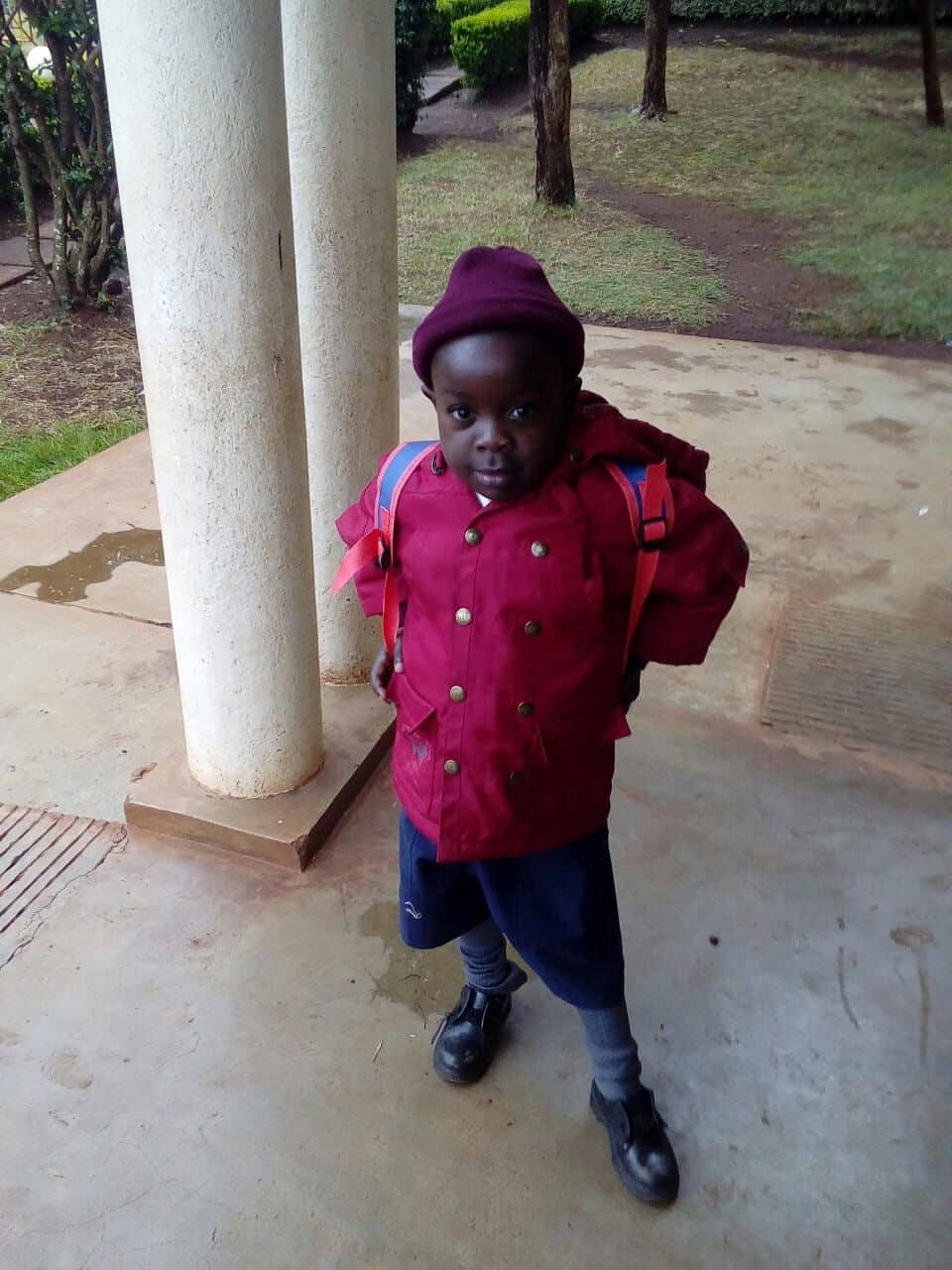
I met Nicky as soon as I arrived at AINA. He was standing near the beautiful hedge of variegated Euonymus that borders the village, shaking hands with a lady while coughing excruciatingly. Despite this, he met my gaze. A few hours later, I saw him again in the canteen hall, and without me doing anything, he decided to interact with me.
He sought me out with his eyes, and we started a silent game in which I offered him small pieces of food that he would either accept or reject based on his preferences: fish, yes; tomato, no; avocado, yes… When the meal was over, he climbed onto my lap as if it were the most natural thing in the world. He had a high fever—his body was burning up—but that didn’t stop him from playing with my glasses and my mobile phone (he even took pictures of me), blowing up balloons, and laughing. At one point, with the utmost ease, he gently pushed my bangs aside, trying to uncover my forehead—it must have seemed strange to him! It was such an intimate gesture, full of delicacy and sweetness.
Nicky was seven years old, I was told, and at the time of our trip, he had only been at AINA for two weeks. His viral load was extremely high, and his immunity dangerously low—he likely had pneumonia or possibly tuberculosis. The next day, he was admitted to the hospital, and I, returning to my life, felt a deep sadness for him. But now I know he’s doing better (as you can see from the photo) and has resumed school with all the other children.
Before going to Africa, those who had already been there warned me that I, too, would catch the African Sickness—that this is a land you become dependent on, that being away from it feels like an ache, and that you will always long to return.
It’s true. You get infected, and there’s no vaccine to prevent it! But for me, it wasn’t the green hills Hemingway wrote about, nor the primordial nature that so unsettled Jung, nor the majestic jaguars of the savannah, nor even the three-dimensional sky and boundless horizons that make you imagine what the world must have looked like before humans appeared.
I long to return to Africa because, beyond all rhetoric, I discovered that within the Children of the Noon village, there is a rare and extraordinary part of humanity—one that nurtures hope.
Renata – Psychotherapist